of the variation in management practice sits within the same company, across its own sites.
Bloom et al., American Economic Review, 2019 Admire for Operations
The operation you designed, running everywhere.
Your system is ready, yet execution still varies by manager. Admire closes the gap between designed and aligned.
Your systems vision, realized.
Team Intake Handoffs Reviews Client Updates
TA Team Alvarez Sofia Alvarez Mastered Proficient Mastered Developing Mastered Proficient Mastered
TC Team Chen Wei Chen Proficient Mastered Developing Proficient Mastered Proficient Mastered
TO Team Osei Kwame Osei Developing Mastered Mastered Proficient Mastered Developing Mastered
TF Team Ferreira
Coaching
Ana Ferreira Proficient Mastered Developing Proficient Mastered Mastered
The gap between designed and aligned ~40% 1 in 8 Zero
Persistent Problems
managers oversees 25 or more people, while the median carries five or six. Your managers are stretched unevenly.
Gallup, 2026measured change in management practice when facilities received advice alone. Improvement came only with months of hands-on implementation support.
Dunsch et al., JEMS, 2023More process won't close the gap. Equipping your managers will.
The usual fixes
Standard Fixes Fail
Each one is reasonable. Here's where each one stalls.
Push harder yourself
Works wherever you personally show up. The rest of the week, the standard is whatever each manager holds it to.
More training
The workshop teaches the standard. Whether it survives Monday depends on who reinforces it back at work.
Operating framework
The rhythm and vocabulary help. What happens between the meetings depends on who runs each team.
More dashboards
The variance is visible. Closing it is a conversation, and someone has to have it.
All four depend on Managers
They're not the bottleneck. They're the lever. Admire equips them for it.
What Admire gives you
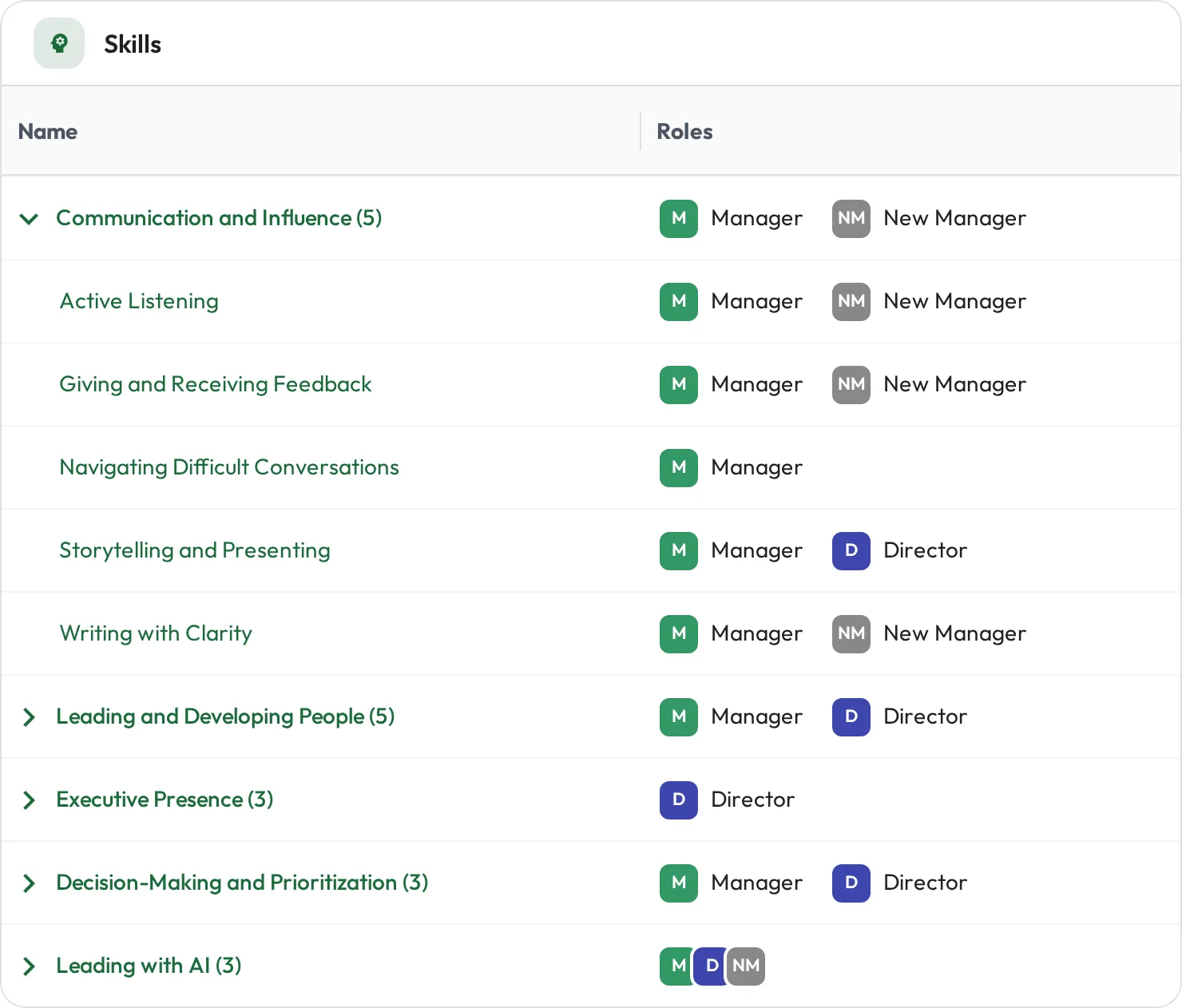
Define the standard once
One written standard for every role: the skills and observable behaviors that define good work. Bring your own framework, or start from the Skills Vault.
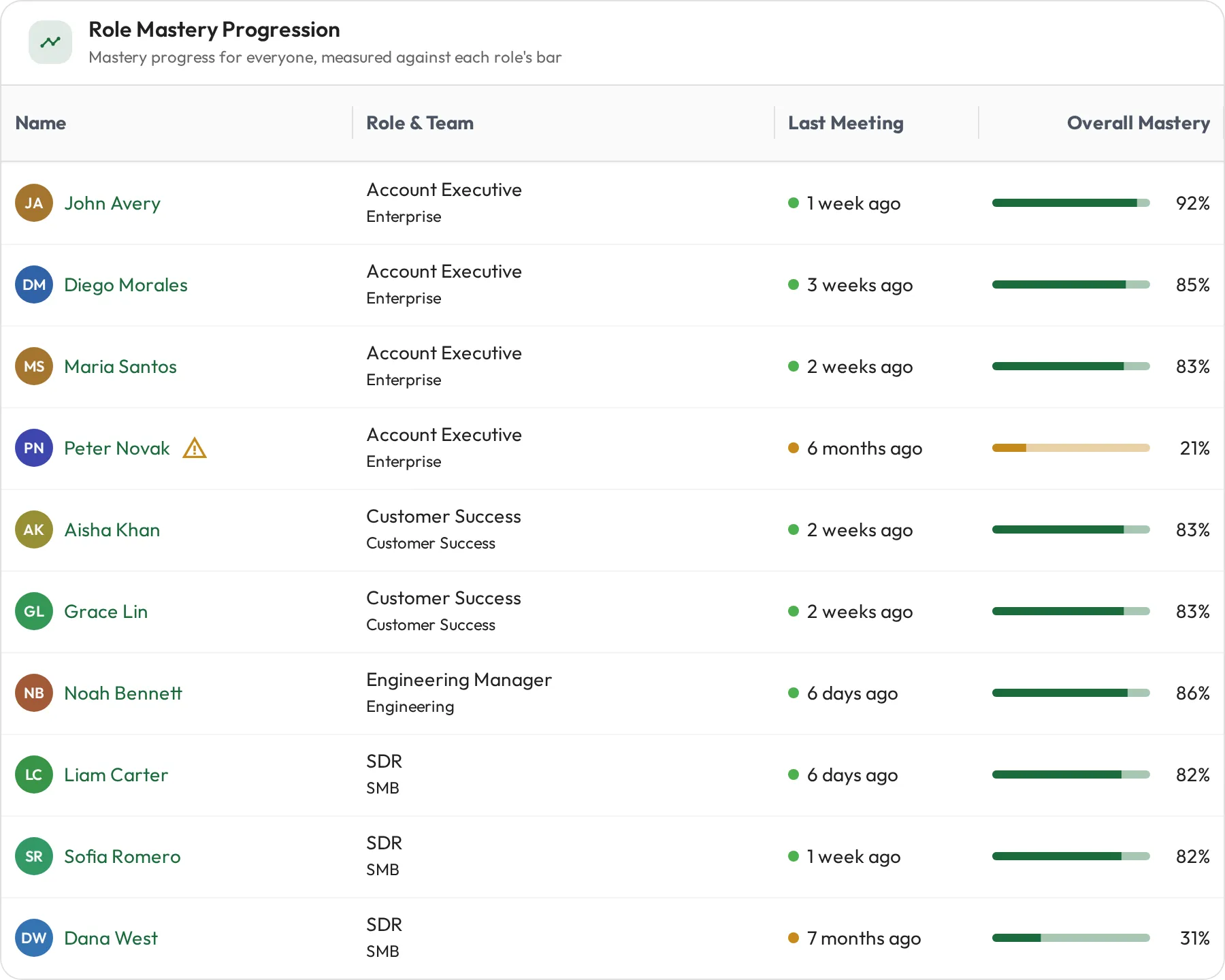
See how it actually runs, team by team
One live picture of every team against the same standard, built from what managers observe plus the KPIs you already track. Drift shows up in weeks, not at quarter end.
 Claude · connected to Admire
 Just watched the morning handoff review. Ravi skipped the intake checklist again. Note it on his Clean Handoffs skill.
Recorded on Ravi's Clean Handoffs skill and added to your Thursday 1-1. That's the third handoff note across the team this month. Show the team view Draft coaching tips
Reply to Claude…
Less reporting, more coaching
Managers capture what they see in seconds, and Admire does the rest: the note lands on the right skill, the next 1-1 agenda builds itself, and AI drafts the summaries.
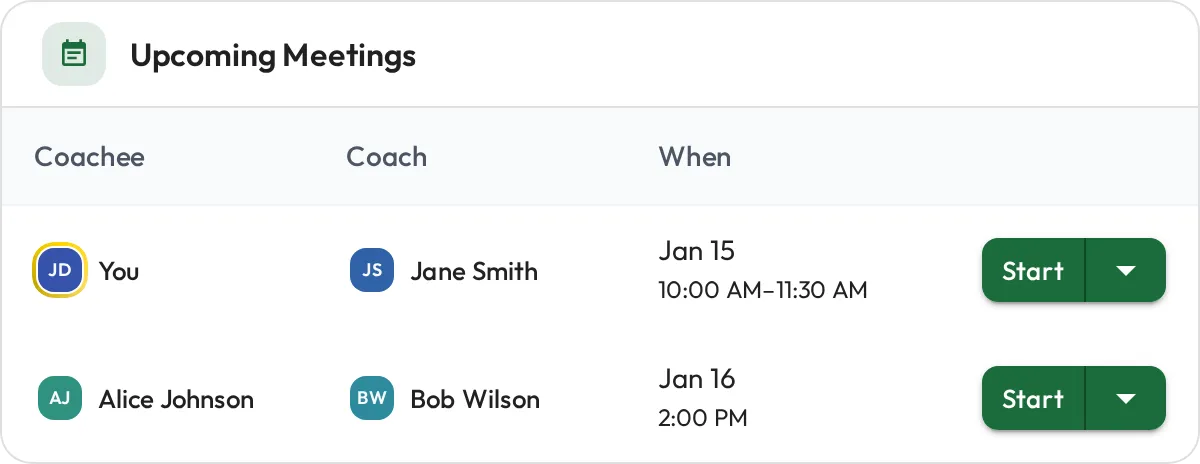
One cadence, every team
A structured rhythm managers can keep: 1-1s and reviews that prep themselves, with notes and commitments resurfacing at the next session.
The payoff
Your systems vision, realized.
One standard, run everywhere, with the evidence to prove it.
One standard
Every team runs from the same definition of good.
Drift you can see
Team-by-team variance surfaces early, not at quarter end.
Coaching in the flow
Minutes in the workday, not weekend admin.
Stronger managers
The people carrying your system get a system of their own.
Change that sticks
New standards become observed behavior, not a memo.
In the open
Observations are shared with the person, built for sign-off by both sides.
FAQ
Operations FAQ
Is this employee monitoring?
No. Admire is manager-led coaching in the open: observations are recorded against defined skills, visible to the person, and both sides can sign off on what was seen. Practice results stay drafts until the person chooses to keep them. Nothing is covert.
We already run an operating framework. Does Admire replace it?
No, it operationalizes it. Your rhythms, standards, and meeting cadence become skill definitions, playbooks, and AI coach guidance, so every manager runs the same system you designed.
Won't this add work to my managers?
It removes reporting work as it adds observation. Capturing what they saw takes seconds, 1-1s prep themselves from skills and history, and AI drafts the summaries and review material.
How is this different from our dashboards?
Keep them. Dashboards record the results; Admire works on the behaviors that produce them, and pulls the metrics you already track in beside each skill so both sit in one view.
What's the methodology behind Admire?
Admire is grounded in Organizational Behavior Management, the applied science of improving performance through observable behavior, with peer-reviewed research published since the 1970s. Import ready-made skillsets from the Skills Vault and start with one team.


We wrote the guides we wish we had starting out.
Forty combined years of operational experience managing teams and coaching leaders, condensed into practical role guides and answers to the scenarios that come up often.